

Mobile App Development Company in Chennai: Engineered for Performance & Scale
An app that ships without a plan for what happens after launch is a common trap: real users surface bugs a demo never caught, a backend that wasn't load-tested slows down once traffic isn't hypothetical anymore, and a codebase nobody documented becomes expensive to hand off to a second developer six months later. None of that is inevitable — it's what happens when architecture and testing get treated as optional instead of foundational.
That's the gap we build against. At Claritus Solutions, we build mobile applications the same way we build every Phase 1 digital asset — as infrastructure that has to work under real usage, integrate with the systems you already run, and hand off cleanly into the traffic and automation work that comes after launch. If you're comparing mobile app development companies in Chennai, here's what that actually looks like: transparent pricing, a structured 8–12 week build process, and architecture decisions explained in plain language before a single screen gets designed.
How Much Does Custom Mobile App Development Cost in Chennai?
Custom mobile app development at Claritus Solutions starts from ₹70,000 for MVP/foundation builds and ranges up to ₹2,50,000+ for full-scale cross-platform systems. Standard delivery timelines run 8 to 12 weeks, covering architecture and discovery, UI/UX prototyping, cross-platform engineering (Flutter or React Native), API integrations, and App Store/Play Store deployment.
We publish this range up front for the same reason we publish it on every service page: pricing you can see before a sales call is easier to plan around than a quote that only shows up after one. Every tier below maps to a defined scope, not an open-ended hourly estimate.
Transparent Scope, Deliverables & Investment
Not every app needs the same build. A single-function internal tool and a customer-facing booking platform with payment processing carry very different engineering loads — so the investment should reflect that, not a flat "app development" quote that doesn't ask what the app actually needs to do.
Core cross-platform build (Flutter or React Native), user authentication, essential database setup, responsive UI
Custom API integrations, CRM/webhook connections (n8n), payment gateways, push notifications, App Store compliance
Offline caching, mobile-first responsive architecture, zero app-store friction, fast load performance
Every tier maps to a defined set of deliverables agreed on before development starts. Anything outside that scope goes through a documented change request rather than open-ended hourly billing.
Not sure a native app is even the right call? Our progressive web app development guide walks through when a PWA is a lower-complexity, lower-cost alternative to a native build — and when it isn't enough.
Final pricing within each tier moves based on the number of user roles and screens, backend complexity, third-party integrations, payment systems, real-time functionality, and admin dashboards — all of that gets scoped during discovery, not guessed at signature.
- Architecture & discovery
- UI/UX prototyping in Figma
- Cross-platform or native engineering
- QA and store-submission support
- Documentation of the architecture and integrations, so handover doesn't start from zero
- Features outside the agreed scope (documented change request, not open-ended billing)
- Post-launch maintenance and support plans
- Ongoing user acquisition and marketing (Phase 2)
Our 8–12 Week Mobile App Development Sprint
We run every mobile app build through the same four-stage sprint. The order matters: architecture and UI/UX get resolved before a line of production code gets written, which reduces the risk of scope changes turning into missed deadlines later in the build.
We map the user journey, model the database structure, and scope every API integration your app needs to talk to — your CRM, payment processor, existing backend, whatever's already in your stack. This is also where we decide native vs. cross-platform vs. PWA based on what you're actually building, not a default answer.
High-fidelity Figma prototypes get built and validated with real users or stakeholders before development starts, so you're catching interface problems while changes are still cheap. If your project needs deeper interface design work than a mobile app wireframe set covers, our conversion-focused mobile UI/UX design service handles that as a standalone engagement.
Cross-platform development in Flutter or React Native. For builds that include backend integrations — CRM, webhook, or payment connections, as scoped in the Full Cross-Platform System tier — those get architected in from the start rather than bolted on after launch.
Security auditing, performance testing, and a compliance review against Apple's App Store Review Guidelines and Google Play's developer policies, aimed at catching avoidable issues before submission rather than after Apple or Google flags them. Final approval and publication timing sit with Apple and Google, not with us — our job is to reduce the odds of an avoidable rejection, not to guarantee one won't happen.
Flutter vs. React Native vs. Native: Which Should You Choose?
The right stack depends on your app's requirements, not on whichever framework an agency's team happens to already know.
Flutter and React Native (cross-platform) cover the large majority of B2B, SaaS, and e-commerce use cases well. A single codebase deploys to both iOS and Android, which reduces duplicated implementation work compared to building two fully separate native apps — though platform-specific configuration, testing, and store setup still take real time on both sides.
Native development (Swift for iOS, Kotlin for Android) makes sense when an app leans heavily on device-specific capabilities — deep camera or sensor integration, high-end AR, or performance-critical processing where every millisecond matters. That's a real category of use cases, not an edge case to dismiss.
Progressive Web Apps skip the app store entirely — no submission review, no required install, instant updates. They can support offline access through service workers when that's built into the app, though their capabilities differ from a fully native build, and they don't get App Store/Play Store presence — which matters if store discoverability is part of your growth plan.
| Your situation | Recommended |
|---|---|
| MVP for iOS + Android on a defined budget | Flutter or React Native |
| SaaS product or e-commerce app | Flutter or React Native |
| Heavy device hardware — camera, sensors, deep AR | Native (Swift / Kotlin) |
| Performance-critical processing, every millisecond matters | Native (Swift / Kotlin) |
| Simple mobile experience, no app-store requirement | Progressive Web App |
| Fastest path to a working product on a limited budget | PWA or the Flutter/React Native MVP tier |
If you're building for an EdTech use case specifically, our breakdown of choosing between Flutter and React Native goes deeper into the framework-specific trade-offs for that audience.
We'll tell you which stack fits during the discovery phase — before you're locked into a technical decision that's expensive to reverse six weeks into a build.
Mobile Applications We Build
The same discovery-first process applies whatever category your app falls into — the deliverable changes, the architecture-before-code discipline doesn't.
Customer-facing product apps and internal tools with role-based access and dashboards.
Catalogues, carts, payment processing, and scheduling with notifications built in.
Account access, order or booking history, and support workflows for existing customers.
Course platforms and student-facing apps — see our Flutter vs. React Native breakdown for EdTech.
Field operations, approvals, and reporting apps built for your team, not the public app stores.
Multi-sided platforms connecting vendors, customers, and admin operations in one system.
Features & Integrations We Build In
These map directly to the pricing tiers above — foundational capability comes standard at the MVP tier, backend and business-system integration is scoped into the Full Cross-Platform System.
- Email & password
- OTP
- Social login
- Payment gateway integration
- Subscription billing
- Push notifications
- In-app messaging
- WhatsApp CRM integration
- REST APIs
- Database architecture
- Webhooks
- CRM connections
- n8n workflow automation
- Admin dashboards
- User management
- Reporting
Where This Fits: Proof, Not Promises
We're not going to hand you a wall of download counters or client logos we haven't actually shipped native mobile products for — that's the same vanity-metric pattern we're trying to help clients avoid, not repeat.
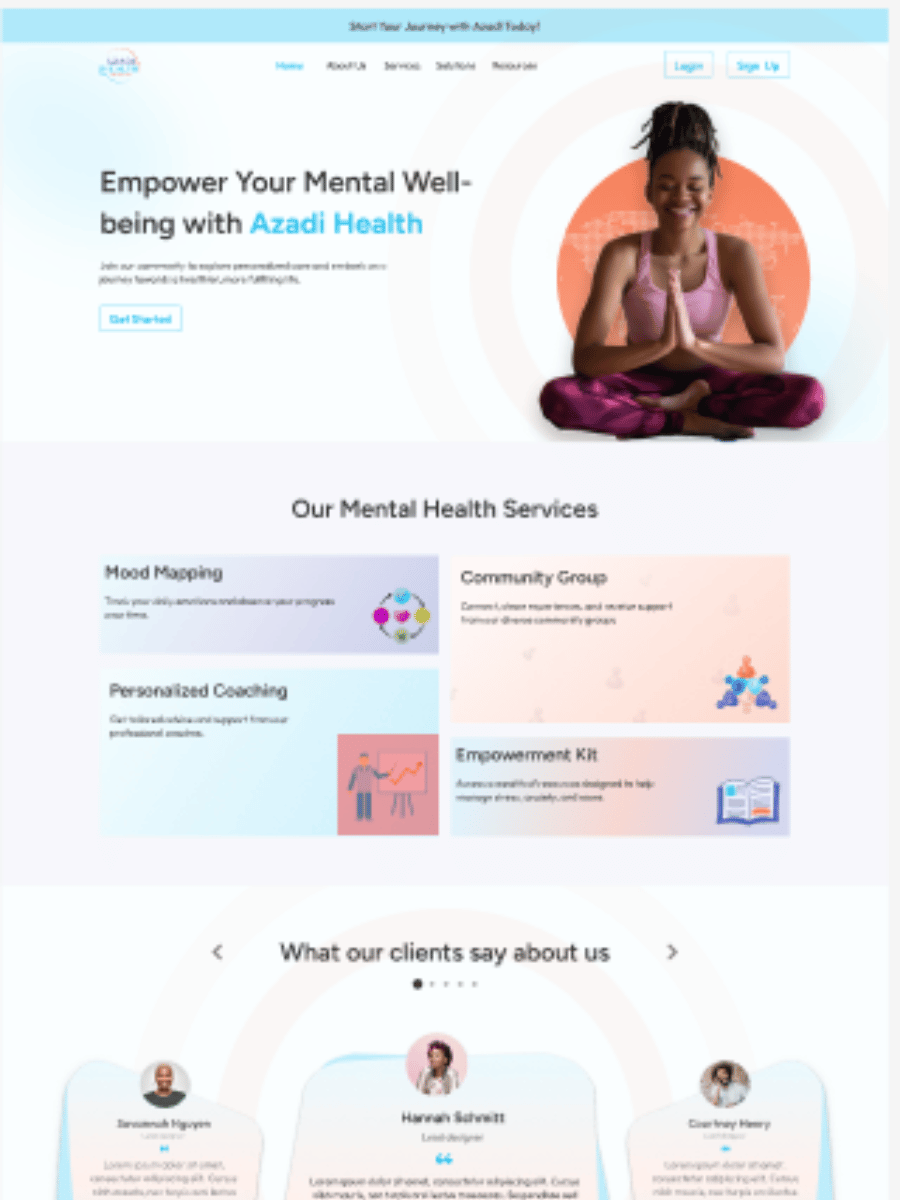
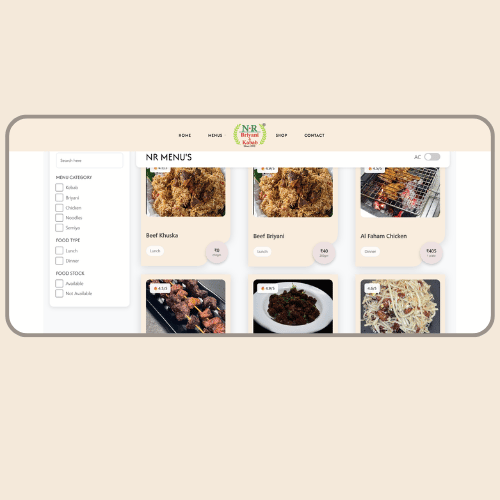
Here's the honest picture: mobile app development sits inside our Phase 1 "Get Online" foundation tier alongside website development and UI/UX design, and it draws on the same engineering discipline we've applied across those builds. Our Azadi Health website redesign is the clearest example of that Phase 1 execution standard — a mobile-first rebuild that took patient engagement up 45%. It's a website project, not a native mobile app, but the architecture and UI/UX discipline behind it is the same discipline we apply to app builds. Our NR Briyani digital menu and QR ordering system — which lifted table turnover 30% — is the closest adjacent example of mobile-first customer experience work we've shipped: a mobile-optimized ordering flow, not a native app, but built on the same UI/UX and backend-integration principles a mobile app requires.
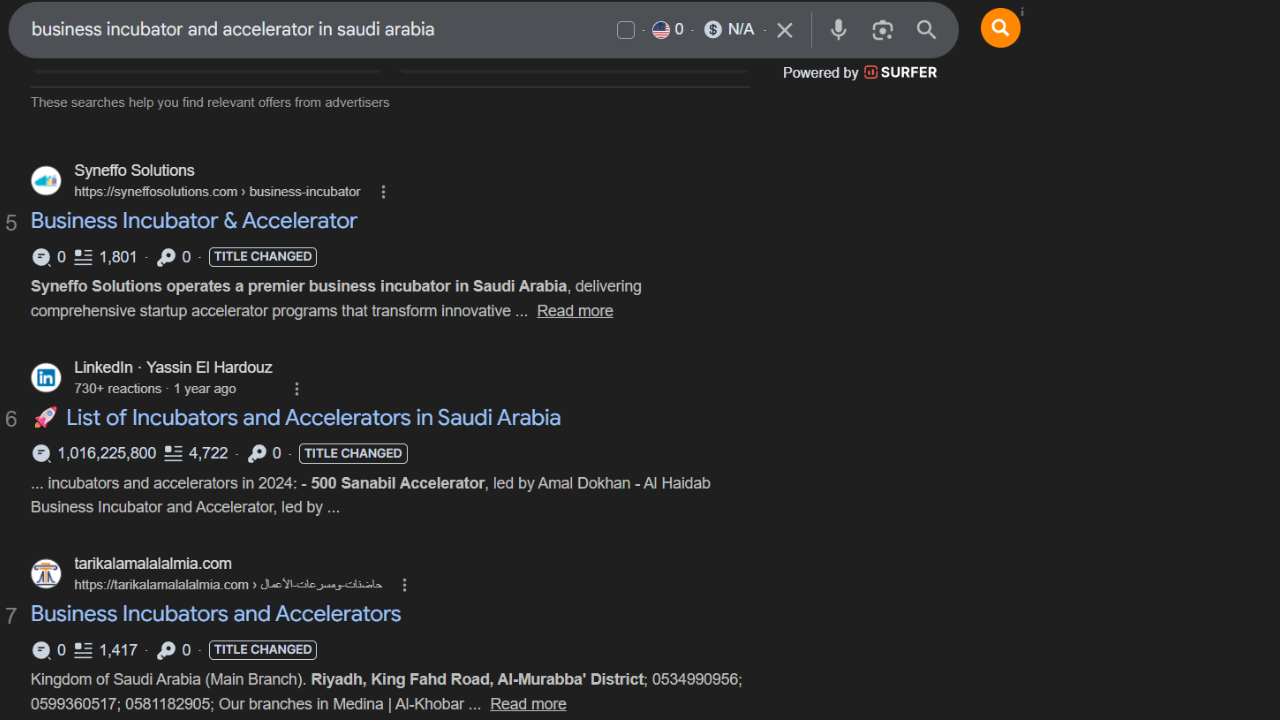
For backend and automation integration — the part of an app that connects it to a CRM, a webhook, or a lead workflow instead of leaving it stranded — our work with Syneffo Solutions on n8n-based automation architecture is the relevant proof point. That's the same integration discipline built into the Full Cross-Platform System tier, where CRM and webhook connections are part of the defined scope.
Mohammed Fahad, founder of Claritus Solutions, leads the technical architecture scoping call himself — it's not handed off to an account manager after the sales call.
Why Businesses Choose Claritus for Mobile App Development
Technical architecture is scoped and agreed before any development begins.
Interfaces get validated with real users in a clickable prototype while changes are still cheap.
Published pricing tiers, defined deliverables, and a documented change request process for anything outside them.
Your app connects to your existing CRM, payment processor, and automation workflows — not left stranded on its own.
Mohammed Fahad scopes the technical architecture personally, not an account manager after the sales call.
Built with a direct path into Phase 2 (user acquisition) and Phase 3 (automation) once your app is live.
What Happens After Your App Launches
For apps that depend on new users finding them — consumer-facing products, marketplaces, booking platforms — a launch that isn't followed by a plan for user acquisition tends to under-deliver on the investment. Claritus Solutions runs on a 3-Phase Growth Framework, and mobile app development is Phase 1 of it:
You don't have to re-shop for a new vendor at each phase — the same team that built the architecture carries it through growth and automation.
Is This the Right Fit for Your Project?
- You need a working MVP or full cross-platform product with a defined budget and timeline
- You want architecture and UI/UX resolved before a line of code gets written
- Your app needs to connect into an existing CRM, payment system, or automation workflow
- You want published pricing instead of a quote that only appears after a sales call
- You're looking for the lowest possible price with no defined scope or architecture phase
- You need the vendor to also run app-store marketing and user acquisition inside this same engagement — that's Phase 2 of our framework, scoped separately
- You want to skip discovery and start writing production code on day one
Frequently Asked Questions About Custom Mobile App Development
Book a Mobile App Architecture Session
Reduce development risk before you commit budget. In a Mobile App Architecture Session, we scope your app's technical requirements, recommend the right stack, and map a defined 8–12 week timeline with transparent pricing starting at ₹70,000 — led personally by Mohammed Fahad, not passed to a sales rep.

