

UI/UX Design Company in Chennai: Building Interfaces That Drive Predictable Growth
A design studio hands over a set of polished Figma screens, the project gets marked complete, and everything looks great in the handoff meeting. Weeks later, the interface hasn't changed how visitors behave on the site — the sales team is still explaining what the business does to confused visitors, and the "redesign" looks finished without doing the one thing it was supposed to do.
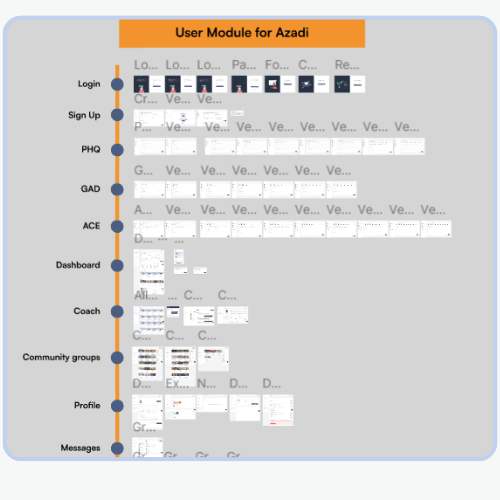
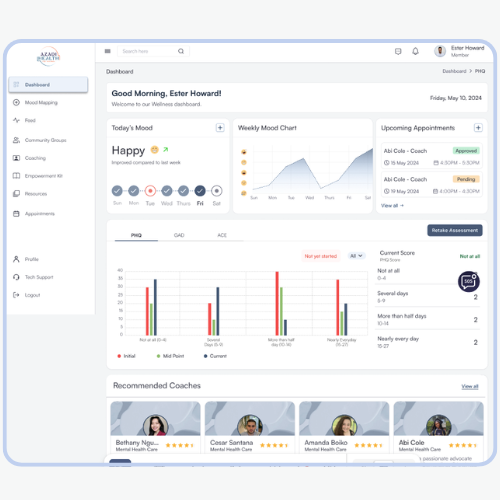
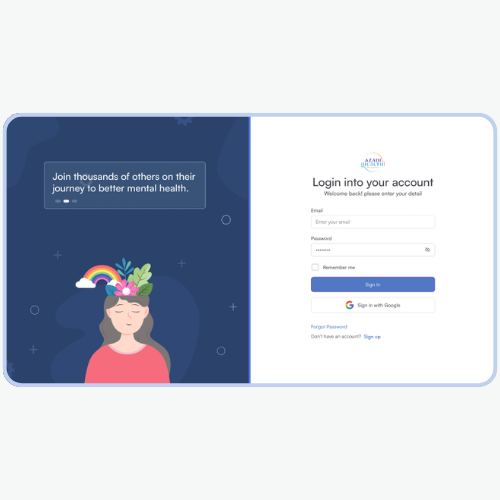
That gap is what this page is about. Claritus Solutions designs UI/UX for B2B founders, SaaS teams, and service businesses in Chennai who need a website or product to do a job: turn traffic into qualified conversations, not just polite compliments. Whether you're searching for a UI/UX design agency or a website design company in Chennai, the real question is the same — does the interface change what visitors do once they land on it?
We treat interface design as Phase 1 of a longer growth system, not a one-off aesthetic project. Get the foundation right, and it becomes the base your later SEO, ads, and automation work can build on.
What does conversion-focused UI/UX design include?
Conversion-focused UI/UX design combines user psychology, information architecture, and business metrics to remove friction from the path between a visitor landing on a page and taking the action that matters — a call, a form, a booked audit. A standard Phase 1 engagement at Claritus delivers customer journey mapping, low-fidelity wireframing, a high-fidelity responsive component library built in Figma, and developer-ready specifications. Core Sprint and Complete System packages are priced from ₹35,000 to ₹75,000, with delivery in 2 to 4 weeks; larger product/SaaS builds are scoped individually.
Core UI/UX Capabilities Built for Conversion and Scale
A logo, a color palette, and a homepage hero aren't a design system — they're decoration on top of whatever structural problems your site already has. Here's what we actually work on.
Before any screen gets designed, we map how a real visitor moves from "found you on Google" to "filled out the form" or "booked the call." In the B2B and SaaS sites we review, it's common to find at least one dead end in that journey — a pricing page with no next step, a service page that never mentions how to actually start, a navigation menu that buries the one page that matters. Fixing that structure, before touching a single color, is where a serious B2B website redesign in Chennai should start.
We build low-fidelity wireframes before touching color or typography, because structural problems are generally faster and cheaper to fix on a grey-box layout than after a full visual design is built. This stage settles the hard questions — what goes above the fold, how many steps a form should have, where social proof earns its place on the page — before we invest time in visual polish. If you want to understand this process in more depth, we've written about wireframing and structural architecture for founders who aren't designers themselves but need to sanity-check what an agency hands them.
Once the structure is validated, we build the interface itself: a component-based design system in Figma with defined typography, spacing, color tokens, and reusable elements — buttons, cards, forms, navigation — rather than one-off screens that don't scale. Files are organized so a developer can implement them in Elementor, a custom stack, or whatever your team already builds in, with far less reverse-engineering of spacing and behavior than a static mockup requires. Responsive and accessible-by-default layout decisions — desktop, tablet, mobile — are built in at this stage, not patched on afterward.
For businesses that already have a live site, we run a structured audit of where visitors are likely dropping off — confusing navigation, buried CTAs, forms that ask for too much too early, mobile layouts that break the flow that works fine on desktop. Where analytics access exists, we use it; where it doesn't, the audit leans on structured heuristic review instead. This is usually where the ₹35,000 Core Sprint tier starts: diagnosing the leak before prescribing the fix.
Who This Is Built For
Claritus works best with B2B founders, agency owners, and SaaS teams roughly in the ₹50L–5Cr revenue range — businesses with an existing product or client base, some traffic or digital presence already, and a real reason to fix the interface rather than just refresh it cosmetically.
We can point to real, Claritus-built UI/UX work in healthcare (Azadi Health, below) and directional portfolio work in B2B/industrial and logistics interfaces (Hitech Enviro Solutions, below). Outside those, we still do custom website development and UI/UX work across e-commerce, services, and hardware/retail — we just won't oversell you on deep vertical expertise we haven't actually built up yet. If your industry isn't one we've named here, ask; the honest answer is usually "yes, and here's the closest comparable work we've done."
What Changes Once the Interface Is Fixed
The direct output of a Phase 1 UI/UX engagement is a set of Figma files. What that's actually meant to change for you:
None of this guarantees a specific lift in leads or traffic on its own — that depends on the traffic you're sending to the site and what happens after someone converts. What it does is remove the interface itself as the reason a qualified visitor doesn't take the next step.
Scope, Timelines, and Transparent Investment
A lot of Chennai design agencies keep pricing behind a "book a call for a custom quote" wall. We'd rather you see the range before you talk to us, so the conversation starts with your actual project instead of a sales pitch.
Full UX friction audit, user journey mapping, and low-fidelity structural wireframes for key conversion paths
End-to-end information architecture, high-fidelity responsive Figma UI, interactive prototype, and developer-ready design tokens
Multi-step SaaS dashboard layouts, user onboarding flows, conversion optimization, and design token integration
These figures cover the design work — research, wireframes, the Figma system, and developer handoff. If you also need custom website development — the coding, CMS setup, and deployment side — that's scoped separately, starting from ₹40,000, as its own line item rather than folded into this range. Final UI/UX scope depends on the number of unique views and how many user flows need mapping, and we confirm the exact number before any work starts.
The 4-Stage Interface Design Process
Here's what actually happens between "we've agreed to work together" and "your developer has everything they need."
We start by understanding your business model, your current traffic sources, and where visitors are currently getting stuck — through analytics if you have them, and through a structured walkthrough if you don't. This is also where we map the primary user journeys the design needs to support.
We build grey-box wireframes for the key pages and flows, and review them with you before any visual design starts. This is the cheapest point in the process to catch a structural problem — a misplaced CTA is a quick edit on a wireframe, and catching it here usually avoids reworking finished screens later.
Once wireframes are approved, we build the full visual design system — responsive layouts, typography, color, and reusable Figma components — so the interface is consistent across every page and every screen size.
We deliver an interactive prototype for final review, then package the Figma file with auto-layouts, organized components, responsive breakpoints, and export-ready assets — so a developer, ours or yours, has clear component specs and responsive behavior documented, with far less guesswork than starting from a static mockup.
Verified Outcomes: Designing for Business Performance
We're a real, roughly two-year-old agency, not a twenty-year design house — so we'd rather show you the specific work we've done than lean on vague claims about "award-winning" design or client counts we can't back up.
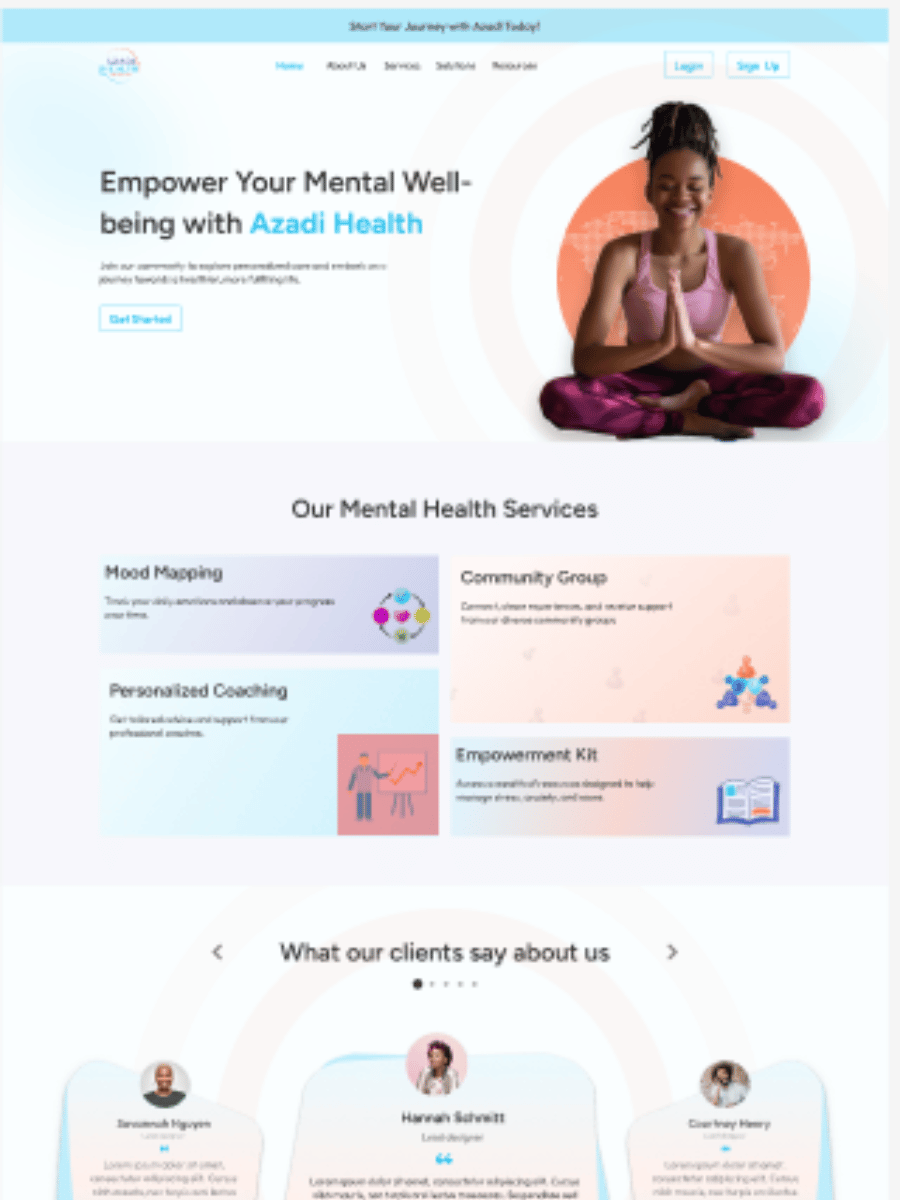
Azadi Health needed a website that could carry patient trust the way a good clinic reception does, not a template with a logo swapped in. It's the engagement we point to for real, Claritus-built UI/UX work in healthcare, and the documented, directional result is a 45% increase in patient engagement following launch.
Not every UI/UX problem is a consumer-facing landing page. Industrial and B2B operators — Hitech Enviro Solutions is one example from our portfolio — often need interfaces that organize dense technical information (service scopes, compliance detail, multi-step inquiry paths) without turning into a wall of text. This is portfolio-breadth work rather than a documented case study with published metrics, but it reflects the same approach: structure first, visual polish second, so a technical buyer can actually find what they came for.
Why Interface Design Is Only Phase 1 of Your Growth Engine
A well-designed interface with no visitors is a well-organized empty room. At Claritus, interface design is Phase 1 ("Get Online") of a three-phase system: Get Online → Scale Traffic → Automate & Scale.
Once your foundation is converting the traffic it already gets, the next constraint is often traffic volume — that's worth checking against your own numbers rather than assuming, but it's the pattern we see most. That's where Phase 2 takes over: scale traffic through targeted SEO and customer acquisition once the interface underneath it is ready to convert what shows up. Skipping this order — buying traffic to a foundation that isn't converting yet — is the failure mode we see most often, and it's the reason we sequence the two phases instead of selling them independently.
Frequently Asked Questions About UI/UX Design
Stop Losing High-Intent Visitors to Broken Interface Architecture
If your current site is getting traffic but not converting it, or you're about to spend on SEO and ads against a foundation you don't trust, that's a Phase 1 problem worth solving before anything else.
Book a Phase 1 UI/UX Discovery Audit — we'll review your user journeys, identify where visitors are dropping off, and hand you a fixed-scope roadmap within 48 hours.
Book Your Phase 1 UI/UX Discovery Audit →
