

Website Development Company in Chennai: Your Digital Engine, Not Just a Brochure
Plenty of Chennai businesses have paid an agency's final invoice for a website that looks clean, loads fine on the demo call, and still won't generate a meaningful lead months later. Not necessarily because the design is bad — because nobody built it to do a job. It's a brochure: it describes the business, and then it stops.

Claritus Solutions builds custom websites for B2B founders, agency owners, SaaS teams, and service businesses in Chennai who need the site itself to work — quick-loading, mobile-first, structured for local search, and wired to capture a lead instead of just displaying a phone number. We treat this as Phase 1 of a longer growth system — the core of our Get Online services — not a standalone deliverable you're left to figure out on your own after launch.
How much does a custom website cost in Chennai, and how long does it take?
A custom website build at Claritus Solutions typically requires an investment of ₹40,000 to ₹80,000 for standard B2B or service-business websites, while e-commerce setups (see e-commerce website development in Chennai) range from ₹60,000 to ₹150,000. The standard Phase 1 development timeline is 3 to 4 weeks from initial discovery to final testing and launch, with e-commerce builds running 4 to 6 weeks given the added product-catalog and payment-integration work. For a fuller breakdown of what a website costs in Chennai and how long it takes to build a website, the pricing section below walks through each package.
Stop Losing Revenue to a Broken Digital Foundation
We still see plenty of website conversations that start and end with how the site looks. That's not nothing — but it's not the job either. A site can look sharp and still lose the business money every month: slow load times that frustrate mobile visitors before the page even finishes rendering, a contact form nobody's tracking, no schema markup helping Google interpret the structured details of what the business does, no clear path from "found us" to "talked to us." If page speed has never come up in a conversation with your current agency, website speed optimization is usually where to start — we've written more on website loading speed if you want to check your own site first.
If what you actually need is the interface and user-experience layer — wireframes, component design, the "how should this look and behave" work — that's a related but separate discipline we cover on our UI/UX design page. This page is about what happens after that: the coding, the CMS, and the technical build that makes a design real.
Why You Need a System, Not Just a Website
Plenty of businesses we talk to have already been through one agency relationship that ended at launch — the invoice gets paid, the website goes live, and then silence. No one's watching whether it converts, no one's tracking where traffic comes from, no one's running basic conversion rate optimization (CRO) on the pages that matter, and the next call from that agency is usually to sell an unrelated service.
We build websites as the foundation of a Growth Systems Agency model instead: Phase 1 gets the technical infrastructure right — the CMS, the mobile-responsive build, the on-page SEO and schema foundation, help getting your Google Business Profile claimed and set up — so that Phase 2 (traffic) and Phase 3 (automation) have something solid to build on. You're not buying a static asset; you're buying the first working piece of a system.
What We Build — and Where Each Service Goes Deeper
Website development covers several different kinds of builds. Here's a short guide to each one, with a pointer to the page that covers it in full.
Most service businesses need 5–10 well-built pages: what you do, who it's for, proof, pricing signals, and a contact path that actually gets used — a form, click-to-call, WhatsApp, and a Google Maps listing that matches the site. Corporate sites add more structure: team, locations, careers, and policy pages. How we scope a company site is covered under business website development in Chennai. Still deciding whether you need a website at all? We've compared a website vs running everything on Instagram.
Design decides whether visitors trust you in the first few seconds and whether they can find the next step. We design mobile-first, around the actions you want visitors to take, and treat readability and accessibility as part of the build rather than an afterthought. Interface and product work — wireframes, component systems, app screens — has its own page under UI/UX design, and what to look for in a website design company in Chennai is covered separately.
WordPress with Elementor is what most business sites need: your team can edit text and images without a developer, plugins handle forms, SEO and bookings, and the platform is widely supported. It isn't the right fit for every project — heavy custom logic or a very tight performance budget can call for a custom build. The build itself is covered on our WordPress development page, and WordPress website cost in Chennai explains what moves the price.
An online store needs more than a product grid: payment options your customers actually use (UPI, cards, cash on delivery), courier and shipping integration, invoices with your GST details, and product pages that can rank on their own. WooCommerce suits businesses that want ownership and lower running costs; Shopify suits those who'd rather not manage hosting and updates — WooCommerce vs Shopify for Indian businesses compares the two. See how we plan and build online stores, what an e-commerce website costs in India, and how much an e-commerce website costs in Chennai.
Sending paid traffic to your homepage wastes budget. A landing page has one goal, matches the ad the visitor clicked, loads fast, and keeps the form or WhatsApp button in view. We plan these together with Google Ads management so the page and the campaign are measured as one. Landing page design has its own page for the details.
Portals, dashboards, booking systems and SaaS products are web applications, not websites — they have user accounts, permissions and data models, so they're scoped differently (see the SaaS / Web App card in the pricing section). Web application development is handled as its own service, and if you need an app on phones, see mobile app development.
Transparent Scope, Timelines, and Investment
A lot of Chennai web development agencies keep pricing behind a "book a call for a quote" wall or a multi-step estimator. We publish ours upfront.
WordPress or custom-coded CMS, mobile-responsive layout, on-page SEO foundation, basic schema markup
Product catalog architecture, payment gateway integration, inventory sync
Custom API connections, scalable database architecture, advanced routing
These figures cover the technical build — CMS setup, development, testing, and launch. If you also need the interface designed first — wireframes, a component system, the visual layer — that's scoped separately as UI/UX design (₹35,000–₹75,000), so you know exactly what you're paying for at each stage instead of one bundled guess. Final scope depends on the number of pages, integrations, and whether the build is custom-coded or CMS-based, and we confirm the exact number before any work starts.
Most business and service websites run well on WordPress — fast to build on, easy for your team to update without calling us for every text change, and plenty scalable for the traffic a new site sees in its first year or two (our WordPress website development page covers what a WordPress build actually involves, if you want the detail). We move to a custom-coded build when a project needs something a page-builder CMS handles badly — heavy custom logic, a tight performance budget, or an interface that doesn't map cleanly onto existing components. SaaS and web-app work usually skips a traditional CMS altogether, since accounts, permissions, and data models make it closer to a product than a page.
If you've been quoted wildly different prices for what sounds like the same website, our breakdown of website development packages in India explains why — including what a ₹20,000 vs ₹50,000 vs ₹1 lakh website actually gets you.
Our 30-Day Launch Process: Building Your Foundation
Here's what actually happens between "we've agreed to work together" and "your site is live" — the short version of our website development process from start to launch.
We map your business model, current traffic sources (if any), competitors, and the specific pages and conversion paths the site needs to support. This gets tracked in a structured discovery document, so nothing gets lost between the kickoff call and the build.
Working from the discovery findings, we approve the interface — layout, navigation, mobile behavior — before a single line of code gets written. Catching a structural problem here is a quick conversation; catching it after development usually means real rework.
This is where the CMS gets built, content gets implemented, integrations get connected, and the site gets tested across devices and browsers — not just demoed on one laptop in good lighting.
We launch, verify tracking and forms are actually firing, confirm mobile performance and load speed, and help get the Google Business Profile and schema foundation in place that Phase 2 traffic work will build on.
Redesign, Maintenance, Security and Speed
A website isn't finished at launch. These four areas decide whether it keeps working — each has its own page for the full detail.
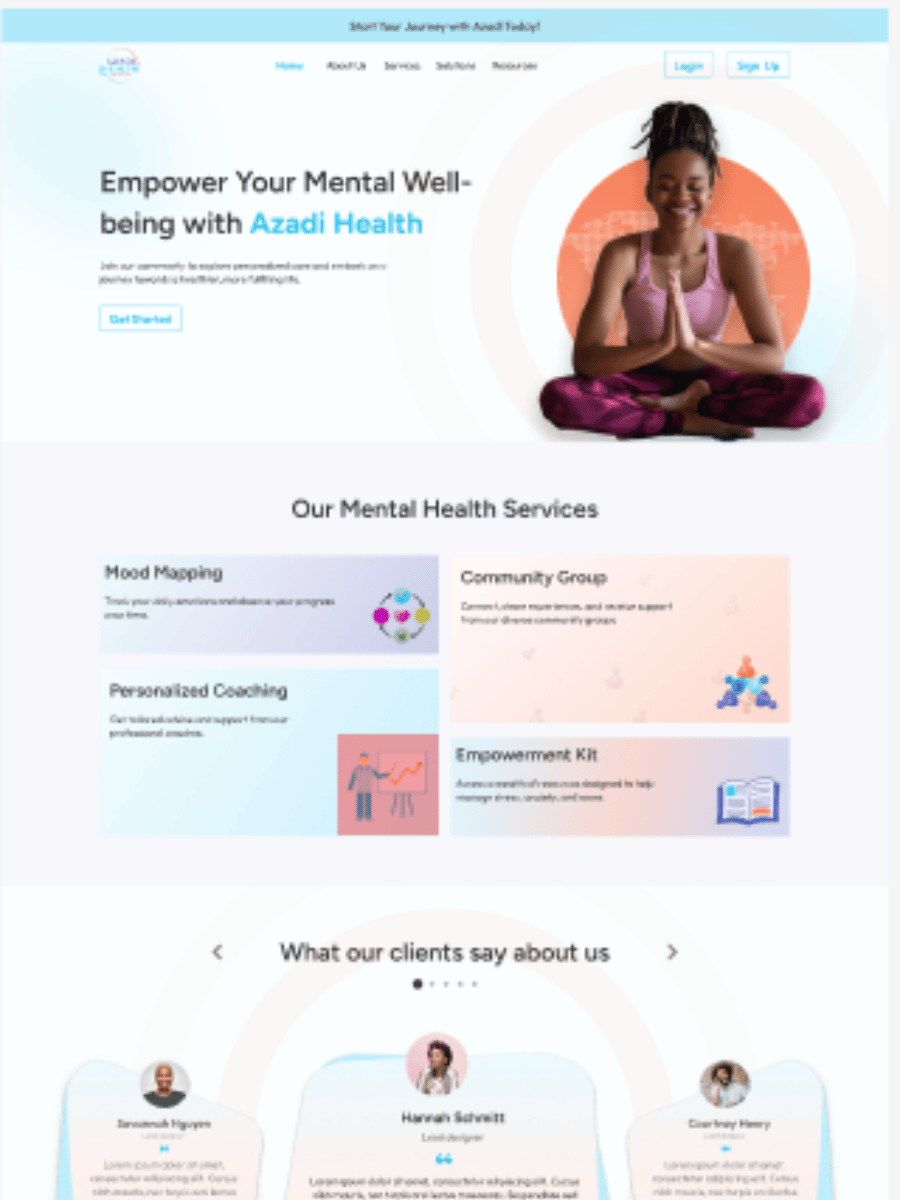
If your current site looks dated, loads slowly or doesn't bring enquiries, a redesign can be cheaper than starting over. The step most agencies rush is migration: mapping old URLs to new ones and setting 301 redirects so existing Google rankings aren't lost. Our Azadi Health work was a redesign — see how it went. More on website redesign services in Chennai.
Every site needs regular care after launch: plugin and core updates, backups, uptime checks and small content edits. For our clients this runs as part of the ongoing Phase 2 and Phase 3 work rather than a separate add-on (see the FAQ below). What that care covers is detailed under website maintenance services in Chennai.
Many small-business website problems come from outdated plugins, weak passwords and missing HTTPS rather than sophisticated attacks. HTTPS is the baseline — here's why SSL certificates are non-negotiable — and our website security checklist covers the rest before and after launch.
Google measures real-user loading and responsiveness with Core Web Vitals: largest contentful paint (LCP) under 2.5 seconds, interaction to next paint (INP) under 200 ms and cumulative layout shift (CLS) under 0.1 count as good. They're one ranking signal among many, but slow pages lose visitors either way — Techiefy's site loads 85% faster after our rebuild.
Verified Infrastructure: Built for Local Search & Conversions
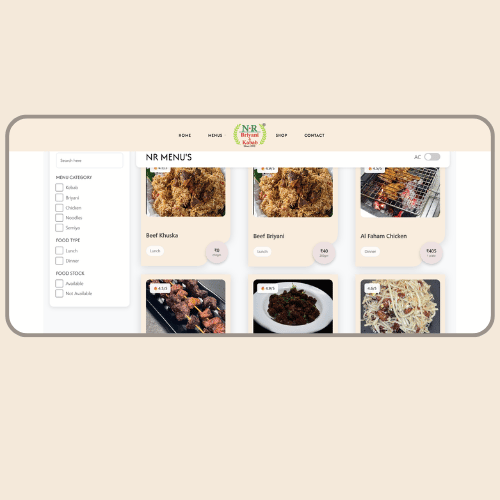
We're a real, roughly two-year-old agency — not a twenty-year development house — so instead of vague claims about "award-winning" builds or client counts we can't verify, here's the specific work behind this, spanning B2B/commercial, healthcare, and hospitality builds.
(If what you need is a mobile app rather than a website, that's a related but separate build — see our mobile app development services.)
Industries We Build For
A clinic, a school and a factory need very different websites. Here's what each one usually needs — healthcare is the industry backed by a published Claritus case study so far, so the others describe the need, not a claim of past projects.
How to Choose a Website Development Partner
Before you sign with anyone — us included — ask four things. Who owns the domain, hosting and website files after launch? Is basic SEO (titles, schema, speed) included or billed extra? What happens after launch, and what does support cost? Can you see live sites they've built and speak to a past client? A vague answer to any of these is a red flag. Our guide on how to choose a website development company goes further.
Freelancer or agency? Our founder freelanced for years before starting Claritus, so we've seen both sides. A good freelancer can be the cheaper option for a simple site; an agency makes more sense when design, development, SEO and support need to work together. We compare them honestly in freelance developer vs web development agency.
Your Website is Live. Now What?
A fast, well-built website with no visitors is a well-organized empty storefront. The website is the engine — traffic is the fuel, and it rarely shows up in meaningful volume just because the site launched.
Once your site is live, the next problem is often traffic, and that's where Phase 2 (Scale Traffic) takes over — SEO services in Chennai, local SEO and Google Maps optimization, Google Business Profile management, and Google Ads management built on top of the technical foundation this page describes. You don't need to go find a new vendor for that; it's the same team as our digital marketing company in Chennai practice, picking up exactly where the build left off.
Once enquiries arrive regularly, Phase 3 (Automate & Scale) adds marketing and lead-follow-up automation, so every enquiry gets a timely reply and is tracked instead of going cold in someone's inbox.
Frequently Asked Questions About Website Development in Chennai
Stop Guessing. Start Building Your Growth Engine.
If your current site is outdated, doesn't work properly on mobile, or you don't have one at all, that's a Phase 1 problem worth solving before anything else — including before spending on traffic or ads against a foundation that won't convert what shows up.
Book a Phase 1 Discovery Audit — we'll diagnose what's actually broken in your current digital foundation (or scope a new build from zero) and hand you a fixed-scope plan for the 30-day build.
Book Your Phase 1 Discovery Audit →
